This project was inspired by the fascinating patterns observed in the sunspot activity recorded over centuries.
Sunspots, which are regions on the Sun's surface that appear darker due to lower temperatures, have been closely
linked to solar phenomena that can have significant impacts on earth. Understanding and forecasting these activities
can aid in preparing for solar events that affect satellite communications, weather patterns, and even power grids.
Data
Method
The project employs a comparative approach, utilizing various machine learning and deep learning techniques
to forecast sunspot activity. Each model, including GNN, LSTM, RNN, and XGBoost, was trained on historical
sunspot data, evaluated for accuracy, and fine-tuned for optimal performance.
Tools Applied
Algorithms used in the project. Python packages used in the project.
Explanatory Data Analysis (EDA)
Before we start training our models, let's explore the data and understand the patterns in sunspot activity.
We need to clean the data by:
Missing Values
Seasonality
Trend and Residual
Results
The comparative analysis revealed that while each model brought unique strengths to the forecasting task,
the LSTM model demonstrated a superior balance of accuracy and efficiency. Detailed results and model
comparisons are presented, showcasing the predictive capabilities and potential areas for improvement.
Model Comparison
Let's compare the models based on their performance metrics.
Hypertuning Paramters
Impact
This project not only enhances our understanding of sunspot cycles but also contributes to the broader field
of astrophysics by providing reliable forecasting tools. These insights can help mitigate the adverse effects
of solar phenomena on modern technology and society.
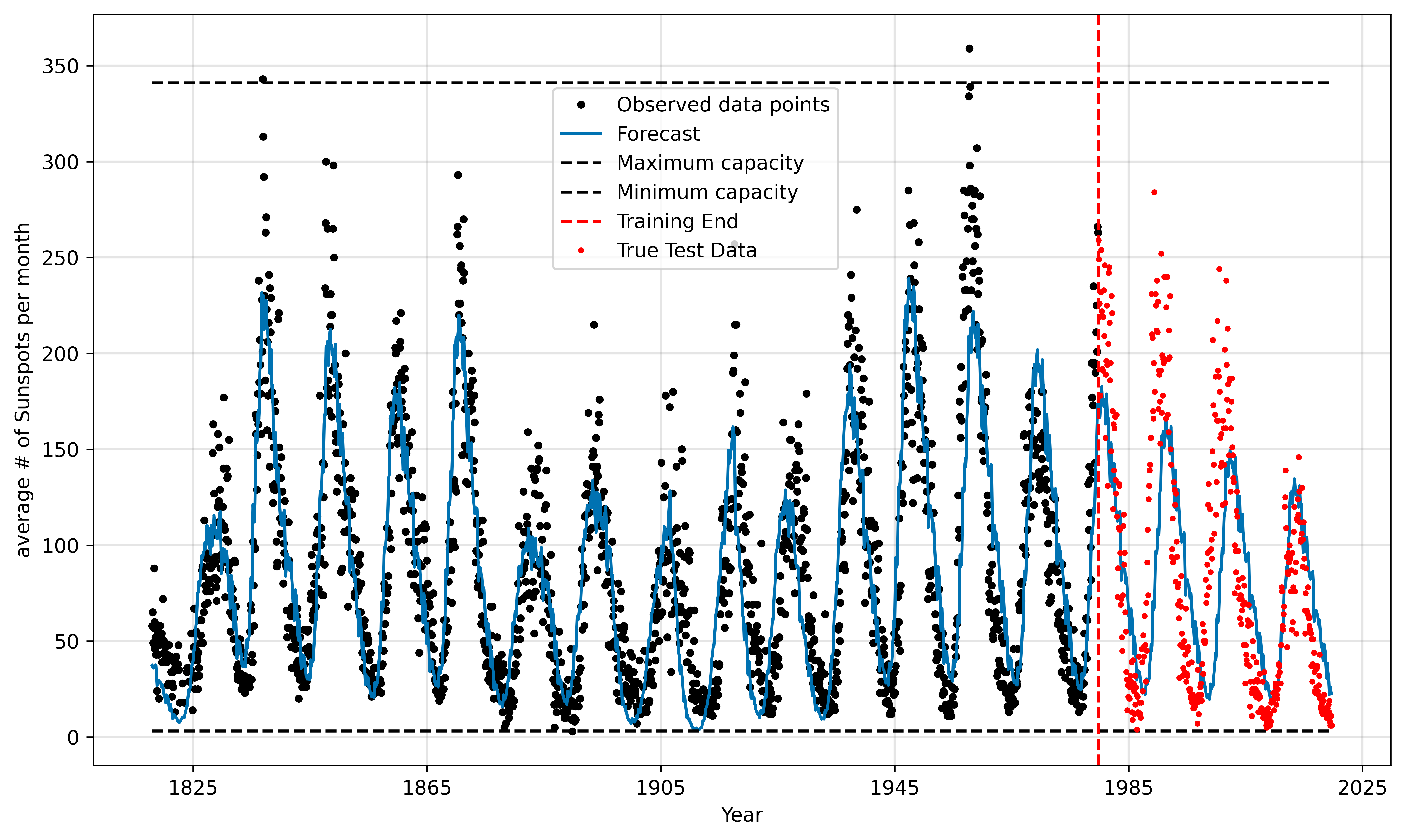
Comparison of Prediction by meta Prophet vs actual sunspots data