Time Series Forecast on Sunspot Activity
Motivation
The 2024 solar eclipse presents a unique opportunity for enthusiasts and researchers alike to witness one of nature's most awe-inspiring events. However, the visibility of the eclipse can be significantly affected by local weather conditions, particularly cloud cover.
This project aims to use historical weather data to analyze cloud cover and other relevant weather conditions to identify the best viewing locations along the path of totality. Additionally, the project helps users find the closest airports to these ideal viewing locations, facilitating travel planning for eclipse chasers.
This program can be used for other solar eclipses in the future.
Packages Used
The analysis and forecasting were powered by several key Python packages:
- NumPy for efficient numerical computations.
- Pandas for handling the dataset.
- Matplotlib and Seaborn for data visualization.
- Scikit-learn for implementing machine learning algorithms.
- TensorFlow and Keras for deep learning models including LSTM and RNN.
- XGBoost for gradient boosting models.
Method
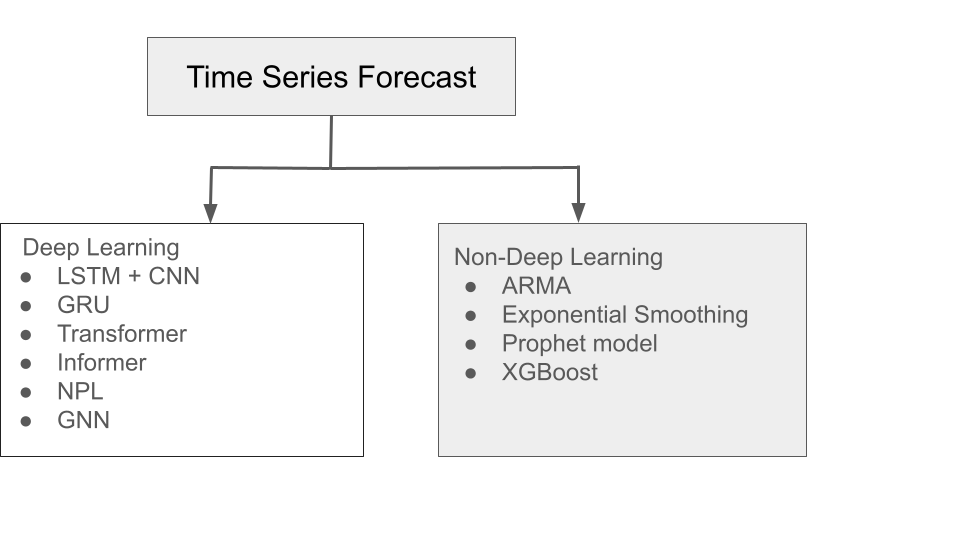
The project employs a comparative approach, utilizing various machine learning and deep learning techniques
to forecast sunspot activity. Each model, including GNN, LSTM, RNN, and XGBoost, was trained on historical
sunspot data, evaluated for accuracy, and fine-tuned for optimal performance.
Results
The comparative analysis revealed that while each model brought unique strengths to the forecasting task,
the LSTM model demonstrated a superior balance of accuracy and efficiency. Detailed results and model
comparisons are presented, showcasing the predictive capabilities and potential areas for improvement.
Impact
This project not only enhances our understanding of sunspot cycles but also contributes to the broader field
of astrophysics by providing reliable forecasting tools. These insights can help mitigate the adverse effects
of solar phenomena on modern technology and society.